
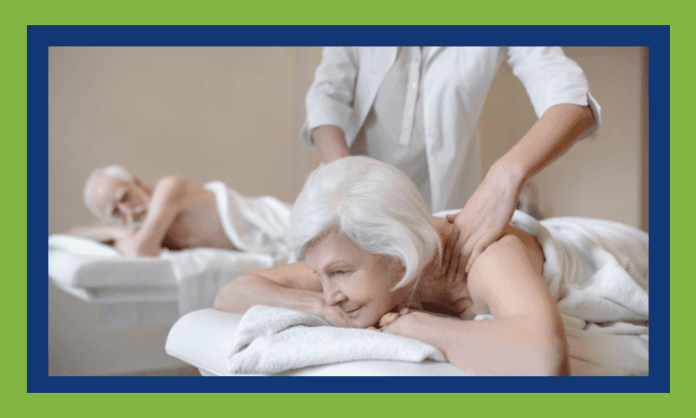

As the population continues to age, more massage therapists are discovering the rewards and unique considerations of working with older adults. Understanding the right massage techniques and considerations for elderly clients is essential for creating a safer treatment environment and adapting your approach to accommodate mobility, health conditions, and comfort. In this article, geriatric massage educator Sheila Alexander shares practical tips to help you deliver safe, effective, and meaningful sessions for elderly clients.
Key Takeaways
- Create a safer treatment environment by improving lighting, minimizing fall risks, and ensuring your space is accessible for clients with mobility aids.
- Modify your techniques and positioning to accommodate common age-related changes, including limited mobility, fragile skin, and difficulty lying prone.
- Adjust your scheduling and intake process by allowing extra time for assessments, communication, and client transitions before and after each session.
- Focus on the overall client experience, using thoughtful touches like personalized music, moist heat, aromatherapy (when appropriate), and attentive communication to help senior clients feel comfortable, respected, and cared for.
From Chair Massage to Geriatric Massage: My Journey
I take pride in being a Baby Boomer: those born between 1946–1964, the largest generation in U.S. history. As Roger Daltrey of The Who famously sang, “Hope I die before I get old” – yet as Boomers, we expect excellence in services and quality of life at every age.
I’ve always done massage as a hobby. Massage school was my midlife crisis career change. Like me, did you go to massage school accidentally on purpose? How many of you knew exactly what your path would be?
While mending a broken heart in 1993, I met the teachers who would change my life: Alex Spassoff and his wife, Denise Moore. Alex brought the massage chair to Florida in 1985 after studying with David Palmer. Alex began training therapists, and his wife is a marketing genius. Together, they built a corporate chair massage business and owned a clinic where I rented a room. They were looking for workers for their accounts, and I was looking for a mentor. I was so excited about the massage chair! What began as my favorite toy became my life’s work.
In 2002, I returned to my native North Carolina to care for my dad, who was stricken with Alzheimer’s, then for my mother and sister’s terminal cancer. While providing care for my family, I modified those chair massage techniques for my dad’s lounger, mom’s hospital bed, and my sister’s wheelchair. My mom had a paraffin bath for her arthritis; I had moist heat packs and essential oils. It was easy to turn the family home into a day spa! In 2004, a family friend recommended me to a retirement community that was looking to add massage & spa therapies to their wellness program. This CCRC (continuing care retirement community) provided me with a furnished treatment room in their wellness clinic for independent living residents. Six months later, the program expanded to include in-room sessions for their assisted living, memory support, and skilled nursing residents. In 2011, I began teaching this profound work to the massage and health care communities. In 2021, I closed my practice to travel and teach my method, Senior Spa, chair massage, and related classes.
Creating a Safe and Comfortable Treatment Space
Most therapists already have seniors in their families and practices. We’re everywhere! Here are some provisions your treatment room needs for safety and comfort:
Enhanced Lighting
Poor lighting greatly increases the risk of falls. If you want to lower your overhead lighting during the session, that’s fine. Just protect them while they’re getting on and off the table and during restroom visits.
Protect Their Grip & Footing
After providing a hand massage, wipe off excess products from the client’s palms so their grip isn’t compromised. Most seniors wear closed-toe shoes, but some will wear sandals. After providing a foot massage, wipe the soles of the feet as well.
ADA Compliant (Americans with Disabilities Act)
Ensure that your doorways are wide enough to accommodate their rollator, walker, or wheelchair. In addition, your bathroom must be within easy reach and meet accessibility standards. Your office parking needs to be accessible and clearly marked.
Dish for Jewelry, Glasses, and Hearing Aids
As an extra touch of service, I keep a microfiber cloth to clean glasses as clients leave. Sometimes reading glasses (including mine) have smudges, food, dandruff, etc. This simple act makes a lasting impression, since you alone took the time.
Shoehorn & Clothing Brush
Most seniors keep a shoehorn at home. Some newer models are 18” long for ease of use. Since their skin is dry, dandruff and pet hair collect on their clothes. Brushing their outerwear is another simple act of kindness that shows you care.
Music
Seniors schedule massage therapy to engage, not unplug. Not only do they want to share their stories, but they also want to know about you: your history, tastes, travels, hobbies, and similar topics. Since the days of CD’s are gone, ask about their favorite artists & genres. Your music subscription will select and – Voilà! For holidays, I suggest Michael Bublé, Bing Crosby, and Irving Berlin. Some favorites for all year are Rod Stewart – The Great American Songbook, Judy Garland, Sam Cooke, acoustic Beatles, Vivaldi, and other classical composers.
Scheduling and Pricing Considerations
“You can’t hurry love, and you can’t hurry seniors.”
– Sheila Alexander
I’ve found the standard timing in our industry just doesn’t work with seniors. They need more time with everything: dressing & undressing, bathroom visits, paperwork, grooming, and especially relaying their intake form. Taking their medical history requires attentive listening, as they often share more information than necessary. As a geriatric therapist, you use this skill not only to formulate their massage & spa care plan but also to address as many of their other needs as possible.
My mentors taught me to allow an extra 15 minutes for a new client’s intake; however, the office never charged for that time. Years of following that advice cost me both time and money. I observed that numerous seniors preferred discussing massage sessions rather than scheduling them. In 2016, I added a 15 min. first visit evaluation fee of $25. My 55-minute session then cost $87, and no one complained.
My session times:
Chair massage: 20,30, 40 minutes
Table massage: 40, 55, 70 minutes
When providing in-room services, figure in your travel & set-up time. I gave 30-minute treatment time for a 40-minute session, 45 minutes of treatment time for a 55-minute session, and 60 minutes for a 70-minute session. Like any other personal service, you need to know what the going rate in your area is.
Intake
When conversing, especially during intake, be sure to speak slowly and articulate. Maintain eye contact and ensure they can see your mouth in case they are hearing impaired. And please don’t assume the senior client is hard of hearing. A visit to my mom’s dr. left me with a lasting impression. Mom was the quintessential Southern lady and had excellent hearing. When the medical assistant came in to take vitals, she addressed Mom in a loud, booming voice: “Hi Mrs. Alexander, how are you today????” Mom smiled at her sweetly and replied. “Well, I’m fine, and I hear just fine too.”
Positioning Techniques
Proper positioning for seniors is just as critical to my work as good body mechanics. Because about 80% of my clients cannot lie prone, and those who can often struggle to turn over, I typically use the side-lying position I learned for pregnancy massage. Begin by providing cervical support then place a pillow between the knees and ankles. Next, I position a pillow on the client’s chest for comfort and add support for the arms as needed.
When I work with clients in hospital beds, I treat the bed like an adjustable (hydraulic) table. First, I raise the bed to a height that supports good body mechanics. If my client is supine, I will raise the bed further as needed, remove the footboard when possible, and then provide foot reflexology.
Therapeutic Enhancements for Senior Clients
Moist Heat Application
Because many seniors enjoy moist heat, I include a microwaveable neck-and-shoulder wrap in my in-room spa kit, along with extra pillowcases to keep it sanitary. When I want to add gentle range-of-motion work, I time it for when the skin and muscles are warm, such as right after bathing or immediately after applying moist heat.
Unless contraindications are present, I use moist heat as a simple, therapeutic add-on in a geriatric chair, lounger, wheelchair, or hospital bed. I follow the facility’s microwave guidelines first; in my community, there are microwaves designated “Therapy Only, No Food or Drinks.” If I need to use a standard microwave, I place the heat pack on a clean plate on top of the turntable.
Aromatherapy
When I use essential oils, I keep the process simple. I keep lavender, eucalyptus, peppermint, and lemongrass in my treatment room. I never apply aromatherapy if the client is on oxygen. Before I begin, I always ask whether the client wants their eyes covered and whether they want aromatherapy oils.
For clients in supine or side-lying positions, I offer a hand towel over the eyes to block light. If the client wants aromatherapy, I place one drop of essential oil on the towel above the nose. If they prefer not to have their eyes covered, simply hold the bottle under their nose and invite them to take three slow, deep breaths. Because my moist heat pack contains herbs that release a pleasant scent when heated, I skip additional oils when I apply that pack.
Skin Care & Dry Brushing
I prefer a cream application on the lower legs instead of standard massage strokes because their skin is thinner and more fragile. To avoid getting oil on sheets or clothing, I prefer creams or lotions for this population. For the back, I use a simple mesh glove to gently stimulate the skin; this can feel great and satisfies that “back scratch” request. In day spas, this service is known as dry brushing.
Why Geriatric Massage Is So Rewarding
Working with this population is one of the most profound experiences a massage therapist can have. They carry decades of stories, resilience and gratitude into every session – and they notice everything: the extra light left on while they find their footing, the clean glasses handed back with a smile, the music that takes them somewhere familiar and good. The techniques matter, yes. But what seniors remember is whether they feel seen, unhurried, and cared for as whole people. When you slow down to meet them where they are, you don’t just provide a service – you become part of the fabric of their wellbeing. That is the heart of geriatric massage, and it is worth doing well.
About the Author

Sheila Alexander has been a licensed massage therapist since 1993 and a continuing education provider since 2011. In 2021, she retired from her hands-on practice to travel and teach her method, Senior Spa, chair massage, and other classes.
Latest Posts
-

Safe and Effective Massage Techniques and Considerations for Elderly Clients
by Sheila Alexander, LMT
-
Oncology Massage: Benefits, Techniques & Healing Support
by Christopher Deery
-
Massage for Diabetes: Supporting Blood Sugar Control & Neuropathy Relief
by Andrea Winzer, MSc, LMT, BCTMB
-
Massage for Common Foot Conditions
by Jimmy Gialelis, L.M.T., B.C.T.M.B.