
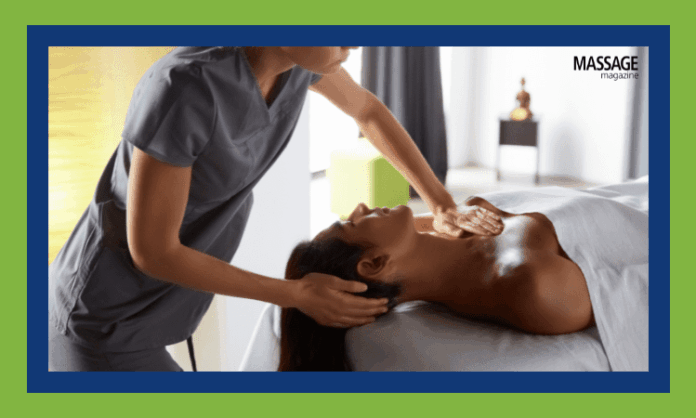

Massage therapy blends close physical work with the need for clear professional boundaries, making personal connection both valuable and complex. By focusing on the client experience, values, and areas of expertise, therapists can authentically show who they are without oversharing personal details. Thoughtful language, imagery, and selective personal disclosure help attract clients who are a good fit while maintaining professionalism. Ultimately, intentional marketing supports meaningful, long-term client relationships built on trust and alignment.
Key Takeaways
- Massage therapy involves professional intimacy, making clear boundaries essential for ethical, effective client relationships.
- Clients return not only for results, but because they feel personally aligned with the therapist’s values, style, and approach.
- Marketing works best when it focuses on the client experience and how sessions feel, rather than oversharing personal details.
- Thoughtful language and imagery can communicate authenticity, inclusivity, and specialization without crossing boundaries.
- Deciding how much personal information to share should be intentional and grounded in what best serves clients, not personal validation.
The Quirky Balance of Massage Therapy
Massage is a quirky profession.
On the one hand, our relationship with our clients is intimate. As the professional in the room, we can ask probing questions about the state of their body and health. We usually ask them to remove their clothes, and we have the authority to place our hands directly on their body and attempt to alter the state of their soft tissue.
That’s more intimate than possibly most of the relationships in their lives.
On the other hand, we maintain specific boundaries to keep our professionally intimate relationship from becoming personally intimate. We don’t have sexual relationships with our clients. We curate how much personal information we share about our own lives. If we work outside our homes, we may be guarded about providing our home address. We may be circumspect about sharing details of our own health.
Why Clients Return
Our clients come to us initially because they want a certain result – less pain, better movement, reduced swelling, etc. They often are also looking for a particular environment/experience as well – spa, sport, spiritual, etc.
They keep coming back because we deliver that. They also come back, often, because they connect with us, personally. It might be our sense of humor, the lens through which we view the human body, our life experiences, our passions, or just our individual quirks. A client is more likely to become a regular when they connect with you personally.
Marketing Without Crossing Boundaries
Which can lead to a paradox in our marketing.
How do we show the more personal side of ourselves, our authentic selves, in our marketing to help attract people who will best connect with us without blowing right through our professional boundaries?
It can be done with thoughtfulness and care.
You can start by talking about the experience of working with you, about the things a client will experience in their session with you.
- “I value listening and will take the time necessary in each session to let you talk about what brings you in for a massage today.” (Translation: If you really want to be listened to, I’m a good fit.)
- “I respect both the physical body and the energetic body and will address both in a session with your permission.” (Translation: If you are curious about or already interested in energy work, I’m a good fit.)
- “I am science-oriented, focusing on research-supported modalities and techniques.” (Translation: If you are more interested in biology than energy, I’m a good fit.)
- “Having spent 20 years in the Navy myself, I especially invite the military (active duty or veterans) to explore how to take care of themselves with massage therapy.” (No translation needed.)
- “Because I value your time and schedule, you can count on me to be punctual, starting and ending on time.” (Translation: if you are a person who cares about punctuality and timeliness, I’m a good fit.)
- “Before your session, you will be invited into the Quiet Room to relax. We provide tea and water.” (Translation: if you like quiet and having a little time to decompress from your day before we get started, I’m a good fit.)
- “I incorporate stretching into many of my sessions because it’s so valuable to athletes. I’m also able to apply Kinesiotape if appropriate.” (Translation: if you are looking for someone who will focus on your needs as an active person, I’m a good fit.)
- “When you are face-up on the table, I’ll place an eye pillow over your eyes to help you relax into the table.” (Translation: If you want someone who does the little things to make you feel pampered, I’m a good fit.)
Those examples are all about the experience of your practice. What about your work specifically? How can you talk about your work a little more personally?
- “I enjoy working with people post-surgery, using manual lymph drainage to help them reduce the swelling and tenderness so common after surgery.” (Translation: I won’t turn you away because you just had surgery.)
- “I am trained in multiple modalities that can be especially helpful to anyone who has undergone top surgery or a mastectomy.” (Translation: I am supportive of people who’ve had a mastectomy and of trans people who have had top surgery.)
- “I love doing perinatal work, supporting persons from ‘trying to get pregnant’ all the way through to post-partum. You are welcome on my table at any point before, during, or after your pregnancy.” (Translation: I am supportive of every stage in your reproductive journey and won’t turn you away because you’re pregnant, even in your first trimester.)
- “I think feet are fascinating and love working on them to make them feel better and work better.” (Translation: you will be getting footwork unless you tell me not to!)
Using Images and Personal Stories Thoughtfully
These have all been examples of language you might include on a website or on social media. Images are even more powerful and translate well to social media.
- If Bubba the Labrador is often in your office, you can post a picture of you with Bubba in your office. (This also alerts people who are allergic to or uncomfortable with dogs that they, sadly, will need to avoid your practice.)
- If you are a military veteran, you can post a picture of yourself in uniform, especially on Veterans Day.
- If you are part of the LGBTQ+ community or an ally, you can post a video of yourself providing a seated massage at your town’s Pride festival.
- If you want to promote yourself as committed to professional growth, you can post a video of yourself at a professional conference, talking about what you’ve learned and how it will affect your work.
- If you incorporate stretching in your work, you can post a video of stretching a client’s leg (with the client’s permission, of course).
- If you are a dancer and like working with dancers, you can post a picture of yourself dancing.
These are all relatively straightforward. What if you want to talk about something a little more personal?
- As a parent, would you post pictures of your children helping you clean the office?
- If you love to travel, would you share photos of your trips (in addition to letting clients know when you will be unavailable because of travel)?
- If you are an artist, would you post pictures of your paintings/sculptures/photos, etc?
- If you’re avid about fishing, would you post a cartoon about fishing?
These sorts of postings give the potential client more insight into who you are as a person in a way that isn’t too invasive. Some therapists might go even further to connect about experiences they may share with their clients.
- If you are trans and have had top surgery, would you share your post-surgical experience, including images of your own scars?
- If you have or have had cancer, would you talk about your journey? Would you share a photo of yourself without hair or receiving an infusion?
- If you are a recovering addict, would you share that info? Would you talk about your journey?
These are obviously more specific personal situations. Sharing them or not is absolutely a judgment call. But if you want to reach out to people who are living through some of the same situations, you may be more likely to share this information on a website or social media. Or would you wait to disclose this until it made sense with a specific client?
Even then, you are taking a chance that you are co-mingling the personal and professional in a way that can be questionable.
Amanda Long, a writer and massage therapist who lives with an eating disorder (alongmassage.com), is very clear about her journey in her marketing. “On my website, I aim to be as frank and straightforward about my eating disorder as both a way to telegraph to others who want a massage therapist ‘who gets it’ or perhaps don’t want that energy/history because it could be a trigger.”
Amanda is very specific about why she is open about her journey. When you start sharing more of your own personal journey, you have to be honest with yourself – is this about seeking something for yourself (sympathy, compassion, attention, etc.) or is it about letting clients know more of what they’re getting when they work with you?
If you are making these kinds of decisions, it’s a good time to sit down with some colleagues or a psychotherapist in a supervision session and talk through your decisions.
However, you decide what to share about yourself, consider how you can communicate who you are so clients can get a sense of whether they’d connect with you or not for a long-term professionally personal relationship.
About the Author

Kelly Bowers is the owner of the Healing Arts Business Academy (healingartsbizacademy.com) which specializes in helping massage therapists set up their private practice and navigate the first two years in practice. She is an author, presenter at regional and national conferences, an NCBTMB-approved provider of continuing education and a retired massage therapist. She lives in Durham, North Carolina. (NC 16669)
Latest Posts