


By Charron Monaye
In today’s workforce, few employment concepts spark as much confusion and concern, as employment at-will. It is the legal framework that governs the majority of employment relationships across the United States, yet many workers don’t fully understand what it means until they find themselves facing an unexpected termination or workplace dispute. For employers, employment at-will represents flexibility, adaptability, and operational efficiency. For employees, it can sometimes represent uncertainty and vulnerability. The reality lies somewhere in between.
As economic conditions fluctuate, technology reshapes industries, and workers continue to reevaluate what they expect from employers, understanding employment at-will has become increasingly important for both sides of the employment relationship.
What Exactly Is Employment At-Will?
Employment at-will is a legal doctrine that allows either the employer or employee to end the employment relationship at any time, for any lawful reason, or for no stated reason at all. Simply put, employers generally have the right to terminate employees without establishing “just cause,” while employees have the freedom to leave a position without providing advance notice.
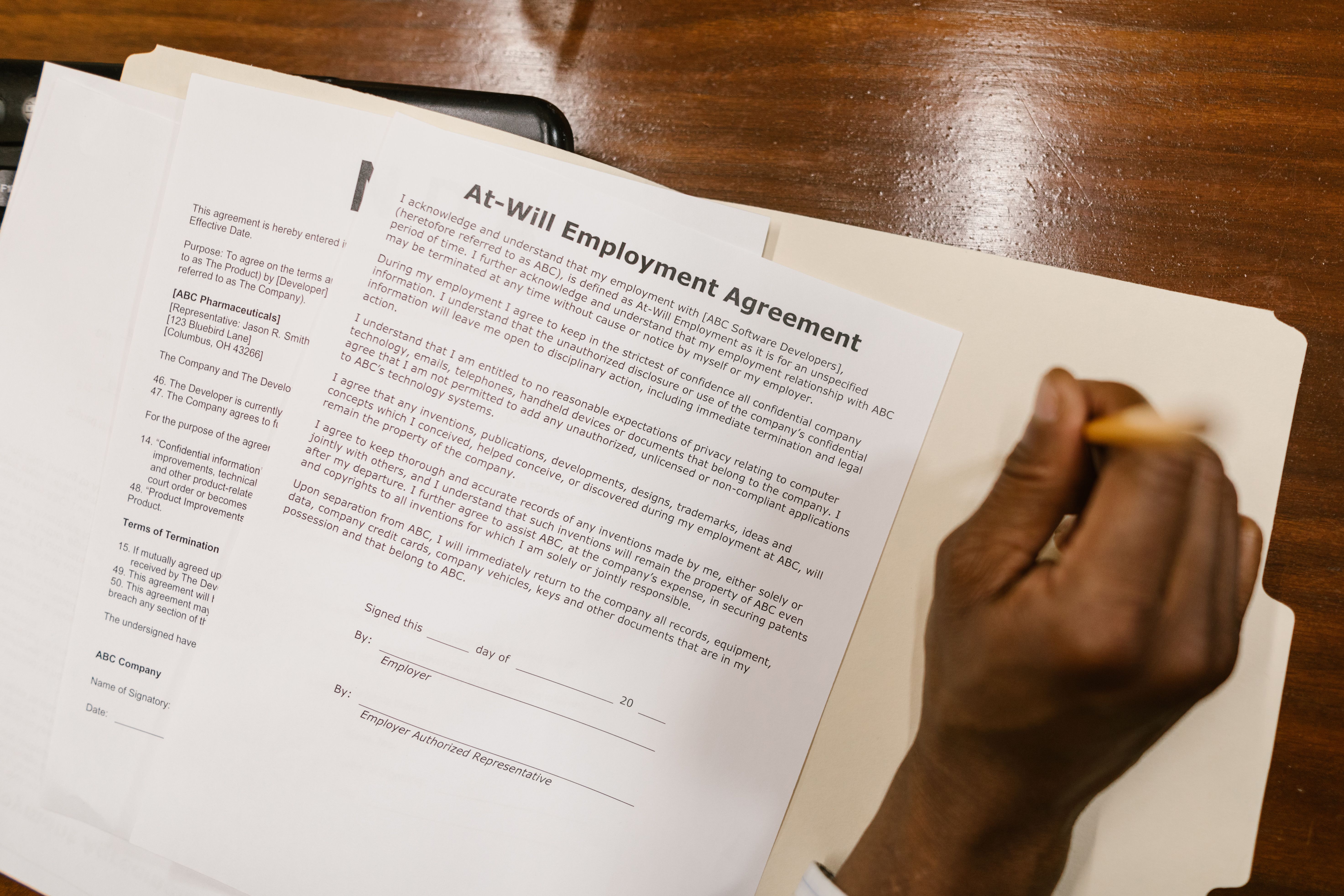
This arrangement has become a defining characteristic of the American labor market. Supporters argue that it encourages business growth and workforce flexibility, while critics contend that it can create instability for workers who depend on consistent employment to support themselves and their families. In an era where economic uncertainty has become the norm rather than the exception, the debate surrounding at-will employment continues to intensify.
The Misconception That Employers Can Fire Anyone For Anything
Perhaps the greatest misunderstanding about employment at-will is the belief that employers possess unlimited authority over employment decisions.
They do not.

While employers maintain significant discretion, numerous federal and state laws place clear boundaries around termination decisions. Employment at-will does not override anti-discrimination laws, whistleblower protections, labor laws, or employee rights. Employees cannot legally be terminated because of protected characteristics such as race, religion, gender, age, disability, or national origin. Likewise, workers are protected from retaliation for reporting workplace misconduct, participating in investigations, filing complaints, or exercising legally protected rights.
Understanding this distinction is critical.
At-will employment means an employer may terminate employment without providing a reason. It does not mean an employer can terminate employment for an unlawful reason. That difference has been the foundation of countless employment law cases and remains one of the most important protections available to American workers.
Why Employers Continue To Embrace At-Will Employment
Despite criticism, employers continue to rely on at-will employment because it offers significant advantages in a rapidly changing business environment. Organizations today operate in markets where consumer demands, technology, and economic conditions can shift almost overnight. Leaders often need the ability to restructure departments, eliminate positions, or adapt staffing models quickly in order to remain competitive. For many employers, at-will employment provides:
- Greater workforce flexibility during economic shifts
- Faster responses to changing business needs
- Reduced administrative burdens
- More efficient management of performance-related issues
- Increased organizational agility during growth or restructuring
Business leaders argue that requiring extensive termination procedures for every employment decision could slow innovation and hinder an organization’s ability to compete in fast-moving industries. As artificial intelligence, automation, and digital transformation continue to reshape the workplace, flexibility has become an increasingly valuable asset for employers.
The Employee Perspective: Security Matters More Than Ever
While employers often focus on flexibility, employees tend to view employment through a different lens. For workers, employment is more than a business arrangement, it is often tied directly to financial stability, healthcare access, retirement planning, and overall quality of life. The possibility of losing a job unexpectedly can create significant anxiety, particularly during periods of economic uncertainty. Today’s workforce is also placing greater emphasis on transparency and trust. Employees increasingly want to understand how decisions are made, what performance expectations exist, and whether leadership is committed to fairness.
As a result, many workers are less concerned with whether an employer has the legal authority to terminate employment and more concerned with how that authority is exercised.
The question is no longer simply, “Can they do it?” The question has become, “Should they do it this way?”
Why Company Culture Is Changing The Conversation
Interestingly, many organizations are moving beyond the minimum requirements of at-will employment. While employers may legally retain broad termination rights, many have recognized that employee trust has become a strategic business advantage. Organizations seeking to attract and retain top talent increasingly invest in:
- Performance improvement plans
- Employee coaching and development
- Progressive disciplinary procedures
- Transparent communication practices
- Career growth opportunities
These initiatives are not always legally required, but they often contribute to stronger workplace cultures and improved employee retention. In today’s competitive labor market, reputation matters. Employees have unprecedented access to employer reviews, workplace insights, and professional networking platforms that can influence recruiting efforts. Companies that develop reputations for fairness and transparency often gain a significant advantage when competing for talent.
The Future Of Employment At-Will
Employment at-will is unlikely to disappear anytime soon. It remains deeply embedded within the American employment system and continues to serve as a foundational component of workforce management. What is changing, however, is how organizations choose to operate within that framework. The most successful employers increasingly recognize that legal compliance alone is not enough. Employees want transparency. They want consistency. They want leadership that values people as much as productivity. Likewise, employees who understand both the protections and limitations of at-will employment are better equipped to advocate for themselves, recognize their rights, and make informed career decisions.
Ultimately, employment at-will represents an ongoing balancing act between flexibility and security, efficiency and fairness, business needs and employee expectations. In today’s economy, the organizations that thrive will not necessarily be those with the greatest authority over their workforce. They will be the ones that understand how to exercise that authority responsibly. Because in a labor market increasingly driven by trust, culture, and accountability, the future of work may depend less on what employers are allowed to do, and more on what employees expect them to do.