
Mastering nail curing time is the foundation of every flawless manicure—yet it’s one of the most misunderstood steps, even among experienced nail professionals.
One wrong curing cycle can lead to lifting, dull finishes, or service breakdowns that cost both time and client trust.
In today’s fast-evolving nail industry, where formulas, lamp technologies, and techniques continue to advance, understanding exactly how long to cure each product under LED vs UV lamps is no longer optional—it’s essential.
Why Curing Time Matters in Nail Services
Curing is the chemical process that hardens gel products through polymerization. If this step isn’t done correctly, everything else fails.
Impact on Results
- Durability: Proper curing ensures maximum adhesion and wear time
- Structure: Builder gels rely on full curing for strength
- Shine & finish: Top coats need correct curing for a glossy seal
Under-Curing vs Over-Curing
- Under-curing:
- Leads to lifting, peeling, and dull finish
- Can cause skin sensitivity due to uncured monomers
- Over-curing:
- Less common, but may cause brittleness in some formulas
- Usually happens with very high wattage + thin formulas
Professional insight: Most issues in salons come from under-curing—not over-curing.

LED vs UV Nail Lamps – Key Differences
Understanding LED vs UV nail lamp curing time helps you choose the right setup for your services.
| Feature | LED Lamp | UV Lamp |
|---|---|---|
| Technology | Light Emitting Diodes | UV fluorescent bulbs |
| Speed | Faster | Slower |
| Lifespan | Long (no bulb replacement) | Shorter (bulbs degrade) |
| Compatibility | Some gels only | All UV-curable gels |
Key Takeaways:
- LED lamps cure faster (30–60 seconds typical)
- UV lamps are universal but slower (120–180 seconds)
- Some older gels require UV only
Pro tip: Always check the manufacturer’s instructions—formulation matters more than lamp type.
Curing Time for Each Nail Product
Below is a professional nail curing time guide covering all major product types.
| Product | LED Time | UV Time | Pro Tip |
|---|---|---|---|
| Base Coat | 30–60 sec | 1–2 min | Apply thin layer |
| Gel Polish | 30–60 sec | 2 min | Avoid thick coats |
| Top Coat | 60 sec | 2–3 min | Seal edges properly |
| Builder Gel (Soft) | 60–90 sec | 2–3 min | Build in layers |
| Builder Gel (Hard) | 90–120 sec | 3 min | Cure structure fully |
| PolyGel | 60–90 sec | 2–3 min | Press evenly |
| Gel Extensions | 60–120 sec | 2–3 min | Flash cure before full cure |
| Rubber Base | 60 sec | 2 min | Great for weak nails |
| Nail Art Gel | 30–60 sec | 1–2 min | Cure each layer separately |
| Acrylic | Air cure | Air cure | No lamp needed |
How Lamp Wattage Affects Curing Time
A proper nail lamp wattage guide helps avoid inconsistent results. Common Wattages:
- Suitable for beginners
- Longer curing required
(Classic UV)
- Standard salon use
- Example: best curing time for UV nail lamp 36W = ~2 minutes
- Ideal for professionals
- Balanced speed and safety
- Very fast curing
- Risk of heat spikes if misused
Professional Recommendation
- Use 48W or higher LED lamps for consistent salon-quality results
- Match wattage with product system
Common Curing Problems and How to Fix Them
1. Gel Not Curing Properly
- Causes:
- Thick layers
- Low wattage
- Incompatible lamp
- Fix:
- Apply thinner coats
- Upgrade lamp
- Use same brand system
2. Wrinkling or Shrinking
- Cause:
- Fix:
- Cure immediately
- Apply thin, even layers
3. Heat Spikes
- Cause
- Fix:
- Use low heat mode
- Flash cure gradually
4. Sticky Layer Confusion
- Important:
- The sticky layer is normal (inhibition layer)
- Fix:
- Clean only after top coat (if required)
Professional Tips for Perfect Curing Every Time
- Apply thin, controlled layers
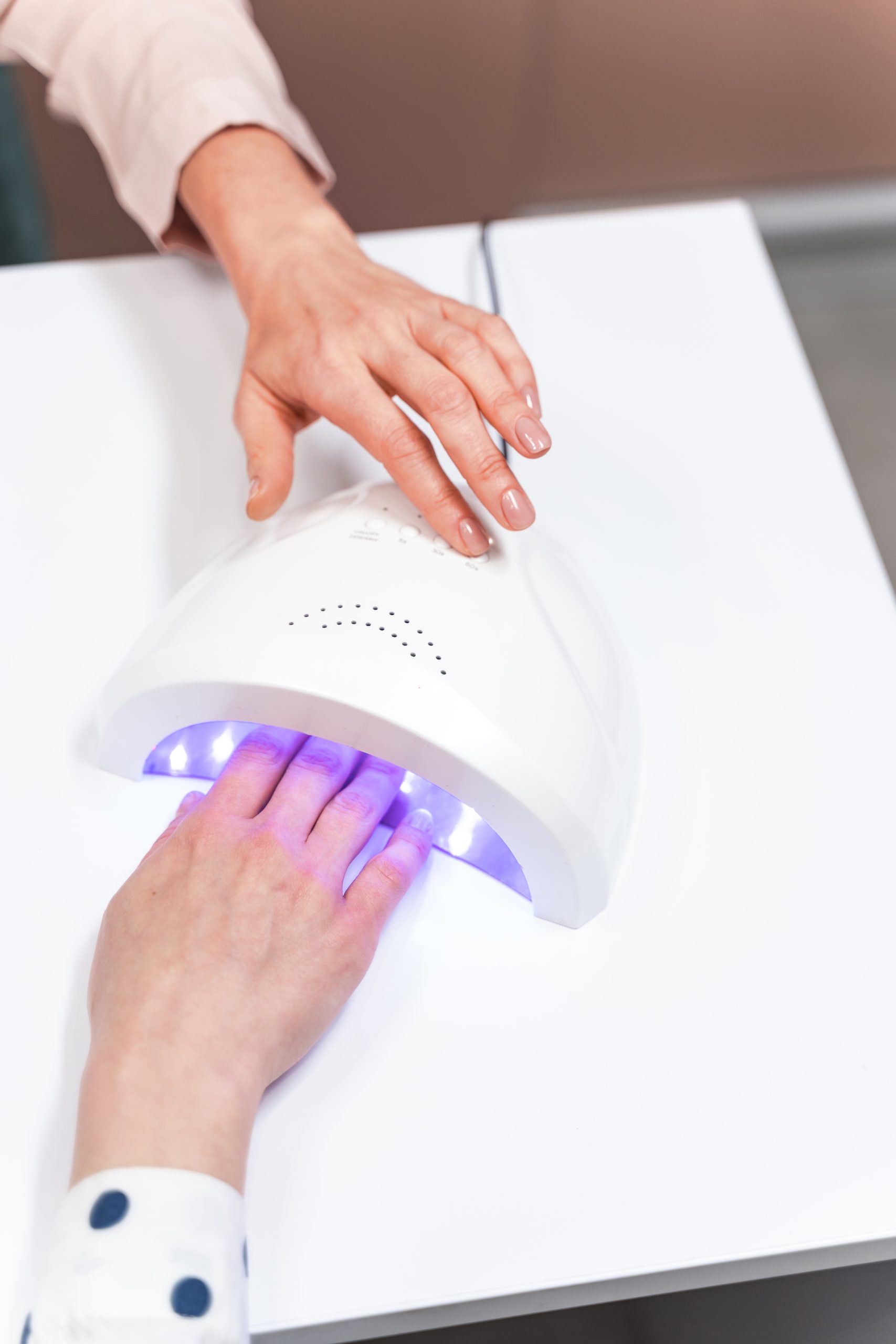
- Ensure proper hand placement inside the lamp
- Replace UV bulbs regularly (if using UV lamp)
- Keep lamps clean—dust blocks light
- Avoid mixing incompatible brands
Expert tip: Always cure thumbs separately for full exposure.

When Curing Time May Not Be Suitable for Clients
Building trust means knowing when to adjust your service.
Considerations:
- Heat-sensitive clients:
Use low heat mode or shorter intervals - Allergy-prone clients:
Avoid under-curing at all costs - Damaged nails:
Use gentle systems like rubber base
Professional honesty: Not every product suits every client—customization is key.
FAQs
Typically 30–60 seconds, depending on the brand and lamp wattage.
It’s rare, but excessive exposure with very high wattage may affect flexibility in some gels.
That’s the inhibition layer—it’s normal and should only be removed after the top coat (if needed).
Yes, but only if the product is compatible. Higher wattage doesn’t fix poor application.
No. Some older gels require UV lamps. Always check manufacturer instructions.
Likely due to thick application or insufficient lamp power.
Around 2 minutes for most gel products.
Yes. Each layer must be cured to prevent smudging and ensure durability.