
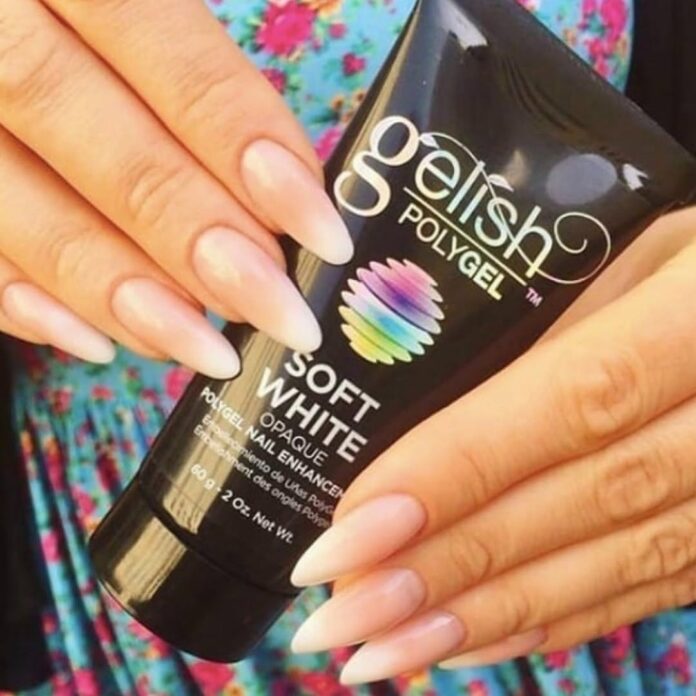

Polygel problems are a common challenge even for experienced nail technicians, despite the product’s growing popularity in professional nail services.
Combining the strength of acrylics with the flexibility of gel, Polygel allows for precise application and long-lasting results.
Even so, issues like lifting, under-curing, cracking, and poor adhesion can occur, affecting the durability and appearance of the nails. Understanding these challenges and knowing how to address them is essential for delivering consistently high-quality results that keep clients satisfied.
Common Polygel Problems
Understanding the symptoms, causes, and fixes for common Polygel problems is essential for maintaining professional-quality results. Below, we explore the issues that often arise and how to handle them expertly.
Polygel Lifting Problems: Causes, Fixes, and Prevention
What Polygel Lifting Looks Like
Lifting occurs when the Polygel begins to separate from the natural nail, usually at the cuticle line or along the sides. Visible gaps form between the gel and the nail plate, which can trap moisture and lead to premature failure.
Why Polygel Lifting Happens
- Improper prep: Oils or residue on the nail plate reduce adhesion.
- Thick layers: Applying too much product can prevent full curing.
- Moisture exposure: Excess water or humidity during application weakens the bond.
How Professionals Fix Polygel Lifting
- Remove lifted areas carefully using a fine file.
- Clean and dehydrate the nail plate to remove any oils.
- Apply a high-quality bonding primer for improved adhesion.
- Reapply Polygel in thin, controlled layers.
- Cure thoroughly according to manufacturer guidelines.
How to Prevent Polygel Lifting
- Always dehydrate and prime nails before applying Polygel.
- Avoid excessive product near the cuticle and sidewalls.
- Educate clients on proper aftercare to reduce moisture exposure.
Polygel Under-Curing: Causes, Fixes, and Prevention
What Polygel Lifting Looks Like
Lifting occurs when the Polygel begins to separate from the natural nail, usually at the cuticle line or along the sides. Visible gaps form between the gel and the nail plate, which can trap moisture and lead to premature failure.
Why Polygel Lifting Happens
- Improper prep: Oils or residue on the nail plate reduce adhesion.
- Thick layers: Applying too much product can prevent full curing.
- Moisture exposure: Excess water or humidity during application weakens the bond.
How Professionals Fix Polygel Lifting
- Remove lifted areas carefully using a fine file.
- Clean and dehydrate the nail plate to remove any oils.
- Apply a high-quality bonding primer for improved adhesion.
- Reapply Polygel in thin, controlled layers.
- Cure thoroughly according to manufacturer guidelines.
How to Prevent Polygel Lifting
- Always dehydrate and prime nails before applying Polygel.
- Avoid excessive product near the cuticle and sidewalls.
- Educate clients on proper aftercare to reduce moisture exposure.
Polygel Cracking at Stress Points: Causes, Fixes, and Prevention
What Polygel Cracking Looks Like
Cracks usually appear at the tips or apex of the nail, often within days of application. Clients may notice splits, chips, or structural weakness.
Why Polygel Cracks at Stress Points
- Improper apex placement: The apex supports the nail; misplacement can weaken stress areas.
- Thin structure: Nails filed too thin are more prone to cracks.
- Excessive filing: Over-thinning weakens the gel and natural nail interface.
How Professionals Fix Polygel Cracking
- Reinforce the apex by adding a small, properly shaped bead of Polygel.
- File and shape carefully, maintaining structural integrity.
- Apply an additional thin layer over stress points for durability.
How to Prevent Polygel Cracking
- Maintain a balanced apex and overall nail structure.
- Monitor thickness at stress points to avoid weak spots.
- Educate clients on proper handling to avoid unnecessary pressure.
Polygel Flooding the Cuticle: Causes, Fixes, and Prevention
What Polygel Flooding the Cuticle Looks Like
Flooding occurs when Polygel spills over the cuticle or sidewalls, leading to lifting and uneven curing. It creates a messy appearance and reduces adhesion.
Why Polygel Flooding Happens
- Applying too much product near the cuticle.
- Poor control during placement.
- Incorrect brush technique or dampness.
How Professionals Fix Polygel Flooding
- Remove excess Polygel immediately with a clean brush or spatula.
- Reapply smaller beads to maintain control.
- Use a slightly damp brush to shape the product without touching the cuticle.
How to Prevent Polygel Flooding
- Apply small, measured beads near the cuticle.
- Control product flow carefully.
- Clean up excess before curing to avoid lifting.
Professional Techniques That Prevent Polygel Problems
Even with proper product use, technique is critical for Polygel application success.

Nail Prep for Polygel
Use primers or bonding agents suited for Polygel.
Proper nail cleaning, buffing, and dehydration ensures a strong base.

Structure & Apex Placement
Build a balanced structure to support daily wear.
Correct apex placement reduces stress and prevents cracking.

Product Control & Bead Ratio
Apply thin layers to avoid bulk and flooding.
Monitor bead size for consistent application.

Lamp Compatibility & Curing
Adjust curing times for layer thickness, humidity, or seasonal changes.
Verify UV/LED lamp compatibility.

Seasonal & Client Considerations
Educate clients about lifestyle habits that may weaken Polygel nails.
Humid environments or dry winters can affect adhesion.

When Polygel May Not Be the Best Choice
Polygel is versatile, but not every client is suited for it:
- Oily nail plates: Reduce adhesion.
- Active clients: High-pressure use can lead to cracks or lifting.
- Chronic lifting issues: May require alternative products like acrylics or hard gel.
Professionals can recommend alternatives while maintaining trust and client satisfaction.
FAQs
Lifting may occur due to incorrect curing, structural imbalance, or applying too much product near the cuticle.
Soft, sticky, or flexible nails after curing indicate under-curing. Recheck lamp wattage and curing times.
Cracking often results from improper apex placement, thin layers, or over-filing. Reinforce stress points for durability.
Use thin layers, monitor bead size, and maintain even distribution across the nail.
Yes. Low wattage or incompatible UV/LED lamps can prevent proper curing and reduce adhesion.