
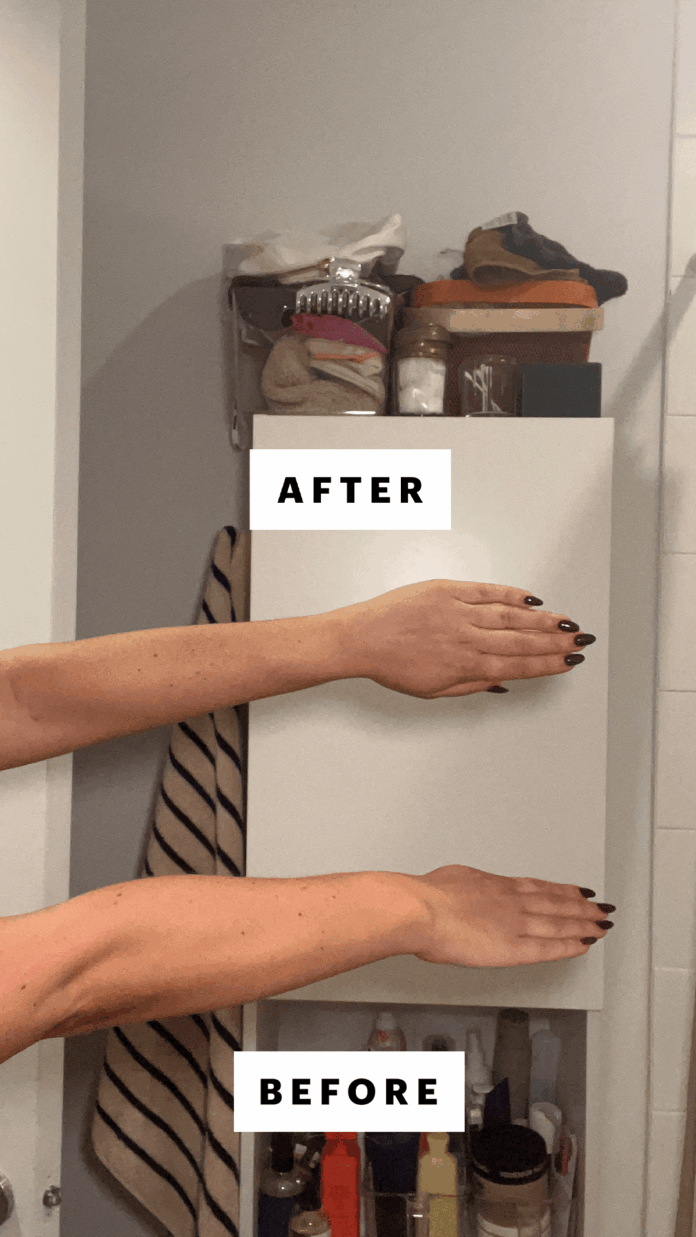

As you can see, this mousse is totally clear, so unlike every other formula on this list, you can’t see where you applied it, whether you buy the light/medium or medium/dark shade. One one hand, it’s nice because you can wear it out of the house without worrying like you look like a crazy person out in public, but on the other hand I found it took more time for me to apply, as I had to go over every area of my body to ensure each section was covered since I had no guidelines.
I opted for the medium/dark shade, this tan develops in four to six hours, which I find to be the average for most self tanners. Four hour is a lighter more natural tan, and six gives you a darker color. I did find that the final color wasn’t as dark as other tanners I tried (cue Dolce Glow or St. Tropez), making it a solid option for paler people or those who want something for the chillier months where you don’t want to look too dark. I tested this one during a long beach weekend, so I found that it faded quicker than others I tried due to chlorine and salt water, but I’m confident it would have lasted longer in my usual NYC environment.
- Key ingredients: aloe vera
- Shades: 2
- Development time: up to 6 hours for full color
- Fragrance: None
- Lasts up to: 5 days
Frequently Asked Questions
How do I prep my skin for tanning mousses?
Before applying any self-tanner, take care of treatments like waxing, shaving, manicures, or hair color touch-ups. “All of those treatments can remove self-tanner,” spray tanner Anna Stankiewicz previously told Allure. Once that’s done, it’s time to prep. Self-tanner can sink into dry skin, leaving dark patches behind that look unnatural. Slough away any flakes with a scrub—focusing on rough spots like the knees, elbows, ankles, and heels—or a cleanser with glycolic or salicylic acids to remove dead, dull skin, Stankiewicz says. I also love an exfoliating mitt (a lot of self tanner brands like Dolce Glow and St. Tropez sell them), which removes any leftover tanner, leaving behind a fresh base for your next round.
What should you look for in the best tanning mousses?
When I’m shopping for a self-tanning mousse, I look for skin-loving ingredients like hyaluronic acid, aloe vera, or vitamin E to keep my skin hydrated while the tan develops—because who wants dry, stripped skin (even if it is bronzed)? Most self-tanners rely on DHA (dihydroxyacetone), a sugar that reacts with amino acids in the top layer of skin to create a gradual glow. The tricky part? DHA can be hard to stabilize, which is why some tans turn tangerine, cosmetic chemist Randy Schueller told Allure. The best formulas add stabilizing sugars like erythrulose; encapsulation technology to lock in a smooth, streak-free finish; and moisturizing emollients—all of which also neutralize that yeasty self-tanner smell we dread.
How do I get an even, streak-free tan?
Start with exfoliated, completely dry skin (emphasis on dry—oils “could interfere with the binding of DHA to the stratum corneum and cause uneven development,” says NYC-based dermatologist Shari Marchbein, MD). Spot-moisturize only the tricky areas—knees, elbows, and ankles—to prevent them from going too dark. If you’re a beginner, stick to lighter formulas to minimize streaks and patchiness, then level up to darker shades once you’re confident. When applying, work from the legs up, using any leftover product on your feet, and finish with your hands. Afterward, give yourself extra drying time. “If the directions say five minutes, wait 10,” Stankiewicz advises. For bonus insurance, dust a talc-free powder all over to prevent transfer, she adds. Then, it’s hands off: no showering or sweating for six to eight hours until it’s time to rinse.
Can I fix mistakes or remove self-tanner from my hands?
Yes! If you notice streaks or patches after the tan has developed, exfoliating mitts on wet skin work wonders for lifting unwanted color away, according to Evans. You can also use a baby wipe to dab away excess or misplaced product as you’re self-tanning. To prevent staining your hands, wash them immediately after applying self-tanner, and treat them like you would the rest of your body with an exfoliating mitt if any color lingers.
Meet the experts
How we test and review products
Before reviewing any makeup, we ask questions about a number of factors: What ingredients are in it? Does the brand offer a wide shade range inclusive of consumers with all skin tones and undertones? Is it safe for readers who have sensitive skin or wear contact lenses? Is it on the affordable side or more of a splurge? Is its packaging consciously designed or needlessly wasteful?