
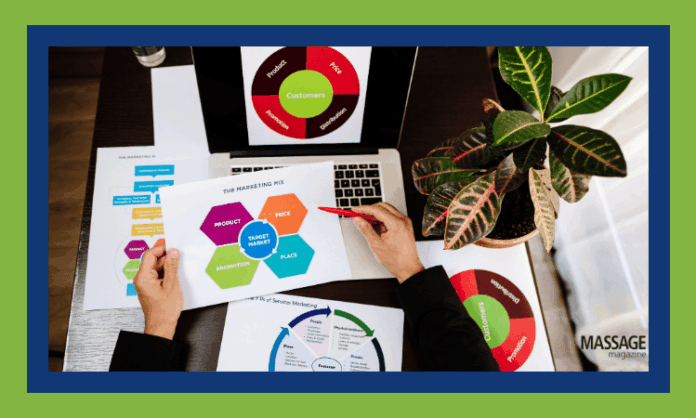

A clear, intentional marketing plan helps massage therapists reach the right clients and grow their practice. Success starts with understanding user intent across awareness, consideration, and conversion stages so messaging resonates at every point. Therapists can boost engagement by creating themed, seasonal, and topical promotions that highlight their skills and expertise. Identifying where ideal clients actually spend their time ensures marketing efforts are targeted, effective, and built for long-term business growth.
Key Takeaways
- Understanding user intent is essential for reaching people at the awareness, consideration, and conversion stages.
- Effective marketing plans balance attracting new clients with retaining and reactivating existing ones.
- Creative promotions help package services in compelling ways.
- Identifying where ideal clients actually spend their time ensures marketing efforts are targeted and efficient.
- A well-structured marketing plan provides clarity, direction, and long-term growth for a massage practice.
For many massage therapists, the thought of creating a marketing plan can conjure up feelings ranging from sheer terror (“Marketing plan! Marketing plan! What do you mean I need a marketing plan?”) to complacency (“Marketing plan? I don’t need a marketing plan. I’m just a small operator.”)
Let’s dispel these misconceptions and explore what a marketing plan is and why you really do need one in 2026.
In this article, I’m going to reveal three secrets to help you create a successful marketing strategy. These secrets will help ensure you reach and connect with people who need your services the most.
Client Retention and Reactivation
A marketing plan is a report that sets out your marketing strategy for the next year, quarter or month. You could include your entire marketing strategy or focus on a single segment or channel. This means you would separate market segments into offline and online activities, for example. Then you will break your marketing down further, getting more specific as you go.
For example, types of marketing you might have in your plan could include trade shows, networking, direct mail, social media marketing, Facebook ads, public presentations and blogging.
The problem isn’t so much understanding what a marketing plan is; rather, the main challenge that comes up for small-business people is understanding how to schedule meaningful activities that relate to one’s business. Your content should help build your client base, deliver value, instill client loyalty and encourage retention.
When planning your marketing activities, you should look beyond only targeting new clients. Attracting a stream of new prospects is important, but so is looking after your existing, loyal clients. Your promotions should also include a blend of client retention and reactivation activities.
Secret 1: You Must Understand User Intent.
To reach as many prospective clients as possible you must understand user intent. Everyone is at a different point of their awareness journey. User intent identifies the expected outcome to a query.
Is the person looking for general information about a problem? This is the “Awareness” phase. These are problem-based enquiries such as “back pain relief.”
Next, we have the consideration phase. Here the person is comparing services. These are solution-based queries such as massage for back pain or even massage therapist near me.
Finally comes the conversion stage. Here the client has made up their mind to book with you. They have their credit card in hand and they’re ready to act. People at the conversion stage are generally always your client or have been referred to you.
Chances are, your promotions are only connecting with people at the conversion stage. This limits your reach and makes growing your business difficult.
To reach new people you must provide information to those at the awareness level. You must educate them on how massage can help with their problem.
You must provide compelling proof for those at the consideration stage. Give them case studies and testimonials. Show them you have experience and get results.
When you understand who you’re marketing to and what their user intent is, you can create a comprehensive marketing plan.
Secret 2: You Need to Work Out What to Promote
Your qualifications and experience will not only impact who you promote to, but also the way you package your services.
Themed promotions: What are some unique and interesting ways you can bundle services around events and holidays? Are you open over the Christmas break when everyone else is closed?
A couple of years ago I made the point of promoting that I was open all through the holiday season except for Christmas and New Year’s Day. I was booked solid. How can you take advantage of these times of year to make it fun and interesting for your clients?
Seasonal promotions: Perhaps you’re a sports massage therapist. Use the seasonal sports calendar to laser target your audience. Maybe you get great results with seasonal health issues. Plan your promotions now, because the months will roll past before you know it.
Topical promotions: These are based around a topic or specific problem. Once again, you can plan topical promotions based on your expertise and results. You could blend seasons with topics to come up with unique promotions that create curiosity and a buzz around your services.
These are just some ways you can package your services up in ways that will excite and entice your prospects.
Secret 3: You Can Find Your Ideal Clients
So now the question is: Where do your ideal clients hang out? While it sounds obvious, sometimes the answer to this question isn’t that simple. Let me share my personal experience with you.
When I was in private practice, I specialized in pain management. My clients were mostly elderly women in their 70s and 80s. They weren’t on Facebook. They didn’t use Google. They had no interest in booking online. They wouldn’t even leave a message on the answering machine! They carried well-worn diaries in their handbags that went thud when they hit the reception counter. My clients wanted to talk to a person and get a verbal confirmation on the spot.
Advertising on Facebook, or any social media platform, would have been a total waste of money, as would an investment in an online booking system. Where were my promotions mainly targeted? Doctors, specialists and physical therapists, because that’s where my ideal client hung out.
When preparing your marketing plan, look at all your options. Don’t just confine yourself to online channels. Take the time to discover all the places your ideal clients can be found: sporting teams and clubs, business meetups, mothers’ clubs and local events, as examples. Think about where they shop and the services they use. Grow your referral network, online and offline.
Plan for Business Growth
A detailed marketing plan can seem complex when you first begin it, but will grow easier with time. A simple Google search will help you learn more about the components of a well-laid-out marketing plan.
Your massage marketing plan will help you take charge of your practice and grow your clientele. Take time to consider who your ideal client is. Identify fun and interesting ways to present your services. Discover the best places to promote. You will be rewarded with an effective marketing plan and the business growth you desire.

About the Author
Tim Cooper is a business and marketing strategist and a wellness industry specialist. He is the founder and co-host of the Global Wellness Professionals Marketing Summit and also provides marketing courses tailored to the needs of wellness professionals. Tim would like to offer MASSAGE Magazine readers a free copy of his Business Clarity Worksheets and training video, here: timcooper.com.au/massagemag.
Latest Posts